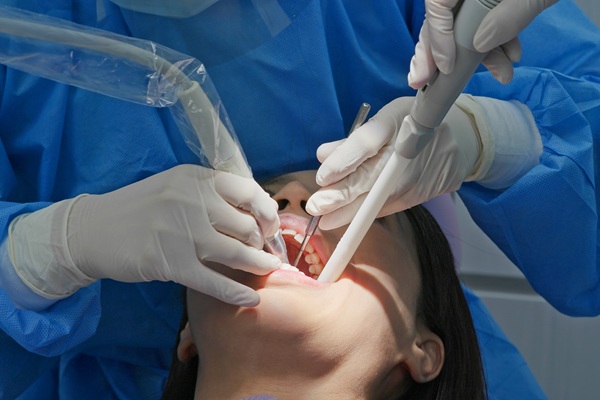
Scaling and root planning treats periodontal disease. However, not every case of periodontal disease requires scaling and root planing. This review helps you determine if treatment is necessary for you and discusses how the treatment process works and how to prevent gum disease.
Scaling and root planing treats gingivitis and periodontitis
Anyone who has signs of a progressive stage of periodontal disease should visit a dentist to determine if scaling and root planing is necessary. The dental team can put together a detailed treatment plan to address your symptoms and ensure that you are able to prevent severe periodontal disease in the long term.
Scaling and root planing explained
Scaling and root planing, also called deep dental cleaning, is a dental procedure that addresses moderate to severe cases of periodontal disease. There are two main types of periodontal disease: gingivitis and periodontitis. Periodontitis is a more severe form that often requires scaling and root planing. The goal of treatment is to remove all bacteria, plaque and tartar below the gum line and on the tooth root. Scaling and root planing does not cure periodontitis, but it is a first step toward overcoming the condition in the long term.
Signs that indicate the need for scaling and root planing
Not every case of periodontal disease requires scaling and root planing. However, if the condition leads to more severe symptoms, then a deep cleaning may be necessary. These signs include:
- Gum pockets
- Bone loss
- Gum discoloration
- Swollen gums
- Gum bleeding
- Exposed tooth roots
The most notable sign that indicates a need for scaling and root planing are gum pockets. When gum pockets are deeper than 4 millimeters, then the patient likely needs scaling and root planing to stop the gum pockets from getting deeper and to reattach the gums to the tooth root.
How scaling and root planing works
Scaling and root planing involves applying a numbing agent and local anesthetic, scraping away the plaque and tartar from the root of teeth and below the gum line (scaling) and smoothing the tooth roots to allow gums to reattach (root planing). The procedure takes from half an hour to two hours. The dentist may need to break the procedure up into two visits. The first would consist of scaling and root planing one or two quadrants and completing the rest on an additional visit.
How to prevent periodontal disease
After scaling and root planing, it is important to follow the dentist’s instructions, which may include using mouthwash to improve periodontal health. Patients should also brush and floss regularly to prevent a buildup of plaque and tartar and remove food and bacteria from between teeth and along the gum line as quickly as possible. Regular dental cleanings are also strongly encouraged when preventing periodontal disease.
Discuss scaling and root planing with a licensed dentist
You can reach our dental team by phone or by sending us a message. We can arrange a time for a visit to discuss whether you need scaling and root planing and to answer all of your questions related to periodontal health.
Request an appointment here: https://shdentalva.com or call Safe Harbor Dental at (757) 333-0087 for an appointment in our Chesapeake office.
Check out what others are saying about our services on Yelp: Scaling and Root Planning in Chesapeake, VA.
Related Posts
In need of a dental deep cleaning and wondering what to expect? General dentistry focuses on ensuring patients' mouths are healthy, which includes deep cleanings. Knowing what to do before and after a deep cleaning helps to support a healthy mouth.Want to understand why a dental deep cleaning is necessary? Also known as scaling and…
It is easy to assume all gum disease is the result of poor oral hygiene. In many cases, it is. However, red or swollen gums can also be an indication of other health concerns completely unrelated to oral care. Because these conditions can be serious, it is important to pay attention to any changes or…
When undergoing a dental appointment, patients can request an oral cancer screening to know if they are at risk of developing the condition. The screenings are meant to detect early signs of the condition before it reaches a more advanced stage.The 5-year survival rate is at about 50 percent, so it is highly vital to…
Since some of the warning signs associated with oral cancer can be confused with other less serious dental problems, it is important for patients to learn more about the warning signs of oral cancer. Understanding the signs can help you determine whether or not the symptoms you are currently experiencing are indeed cancer-related. You can…